Want firmer, smoother skin without surgery? Radiofrequency (RF) and High-Intensity Focused Ultrasound (HIFU) offer different approaches to skin tightening. Although both treatments aim to improve skin firmness, they use distinct technologies and may suit different concerns. Understanding their benefits, limitations, costs, and recovery expectations can help you make a more informed decision with a qualified dermatologist.
Your choice between RF and HIFU depends on your skin concerns, level of sagging, desired results, and overall suitability for each treatment. A HIFU facial treatment dermatologist in Newtown, Kolkata, can assess whether focused ultrasound, radiofrequency, or another approach may suit your needs. Moreover, understanding expected results and potential risks helps you set realistic expectations before booking a skin tightening consultation.
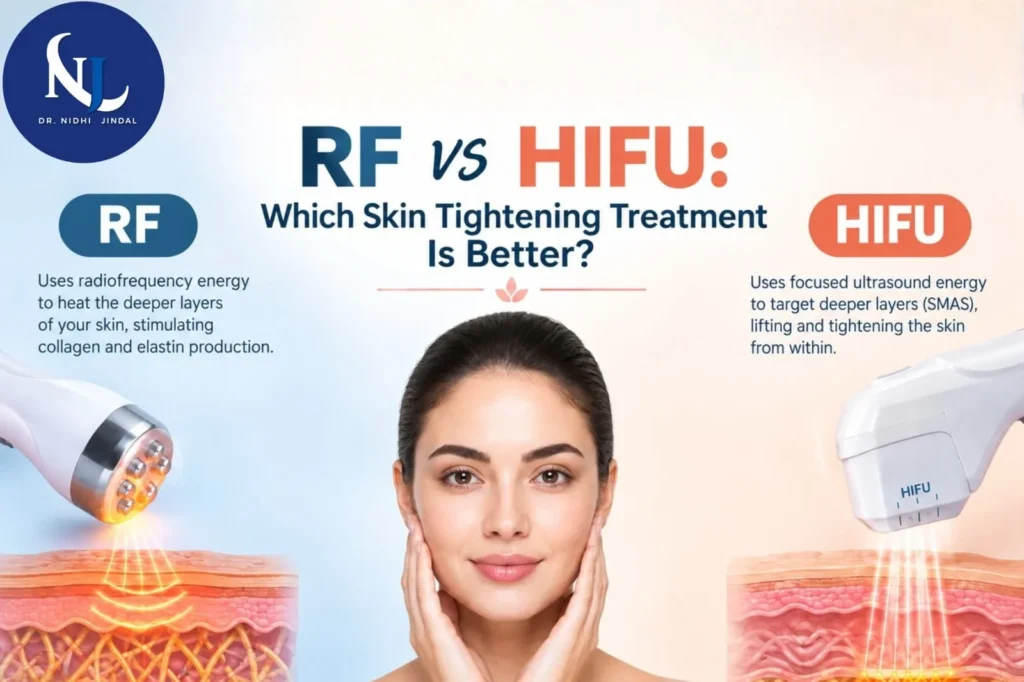
Radiofrequency (RF) and High-Intensity Focused Ultrasound (HIFU) are non-surgical procedures that aim to improve skin tightness and firmness. However, they work through different energy mechanisms and can focus on varying depths of skin tissue. If you are comparing treatments, understanding how each works can help you discuss suitable options with a dermatologist.
Radiofrequency treatment gently heats the skin using regulated energy, helping stimulate collagen renewal and support firmer-looking skin.
.
Depending on the device, it can target different skin depths and may involve microneedles.
HIFU uses focused ultrasound waves to create precise thermal zones within deeper layers of the skin.
Certain devices target deeper support layers, while others address more superficial tissue. The treatment depth and intended results depend on the device and treatment protocol.
Neither treatment works best for everyone. RF may suit people seeking gradual improvements in skin texture and firmness, while appropriately selected HIFU treatments may help address mild skin laxity and lifting concerns. The results depend on your skin’s condition, the area being treated, the technology used, and the practitioner’s level of expertise.
.
| Feature | RF skin tightening | HIFU skin tightening |
| Technology | Radiofrequency energy | Focused ultrasound energy |
| Main purpose | Improve firmness and, depending on the device, skin texture | Target specific areas of loose skin and help create a firmer, more lifted appearance. |
| Treatment depth | Varies by device and technique | Varies by device and focal depth |
| Typical treatment plan | May require multiple sessions | May require fewer treatment sessions, depending on the device used and the specific skin concern. |
| Results | Develop gradually as collagen remodelling occurs | Develop gradually over weeks to months |
| Recovery | May involve temporary redness, swelling, or tenderness | May involve temporary redness, swelling, tenderness, or discomfort |
| Important consideration | Microneedle RF has different risks from non-invasive RF | Incorrect settings or technique can injure deeper tissues |
RF uses radiofrequency energy to heat tissue, whereas HIFU delivers focused ultrasound energy to selected depths. RF may suit some skin-firmness and texture concerns, while HIFU may suit selected lifting concerns. A dermatologist can recommend an approach based on your skin and the specific device.
RF delivers energy that heats targeted tissue. This targeted heat may encourage collagen renewal, helping the skin become firmer over time.
.
Depending on the device, treatment may be non-invasive or use microneedles to deliver energy into the skin.
However, RF does not guarantee a dramatic lift, and results vary. Microneedling RF also carries risks such as burns, scarring, pigment changes, and fat loss in some circumstances. Discuss the device-specific risks before treatment.
HIFU directs focused ultrasound waves into selected tissue layers, generating small, controlled areas of heat beneath the skin.
The resulting tissue response may stimulate collagen remodelling over time.
Depending on the device and treatment area, clinicians may use HIFU to address selected concerns around the jawline, cheeks, neck, or brow.
Nevertheless, HIFU cannot replicate the results of surgical lifting. Some people experience pain, swelling, bruising, numbness, or temporary nerve-related symptoms. Inappropriate treatment can also cause burns or unwanted tissue damage.
The duration of results depends on the device, treatment settings, skin condition, age, and individual response. Neither RF nor HIFU provides permanent results, and research does not establish one method as universally longer-lasting across all devices and treatment areas.
For a fair comparison, ask your dermatologist about:
Although collagen remodelling may continue for several months, natural ageing continues after treatment. Therefore, maintenance may become necessary.
Your treatment choice should reflect your main concern rather than popularity alone.
Moreover, avoid choosing a procedure solely because it promises a painless experience, immediate results, or permanent tightening.
Not everyone is an appropriate candidate. The right treatment option depends on the technology used, the area being treated, and your medical background.
Tell your dermatologist if you have:
.
These factors do not have identical implications for every device. Your clinician should review the manufacturer’s guidance and your medical history before proceeding. Check patient’s review: https://shorturl.at/vDUwc
If you are considering professional skin tightening, a consultation can help clarify which treatment may suit your concerns. A HIFU facial treatment dermatologist in Newtown, Kolkata, can assess skin laxity, discuss suitable technologies, and explain realistic outcomes and potential side effects.
At Dr Nidhi Jindal Clinic, discuss your skin concerns and ask whether the clinic offers an appropriate RF or HIFU procedure for your needs. Confirm the available device, the clinician performing the treatment, expected costs, possible downtime, and follow-up arrangements before booking.
If RF appears more appropriate, ask about the Best RF skin tightening treatment for the face for your particular skin condition. The most suitable option should depend on clinical assessment and evidence, not on a universal ranking.
A consultation can also help you understand the HIFU facial treatment services at Dr Nidhi Jindal Clinic, where available, and whether they align with your treatment goals. check youtube click: https://www.youtube.com/shorts/3wC017tzdO4
RF and HIFU offer different approaches to non-surgical skin tightening, but neither is universally better. RF may help improve firmness and texture, while HIFU may suit selected lifting concerns. Results and risks depend on the device and individual skin condition. Consult a qualified dermatologist at Dr Nidhi Jindal Clinic to discuss realistic expectations and choose an appropriate treatment plan. Click the map link for visit: https://maps.app.goo.gl/Qd58qQPZ3T7eQu5o6
1. Is RF better than HIFU for facial skin tightening?
Not always. RF may help improve firmness and, with certain devices, skin texture. HIFU may help with selected lifting concerns. Your skin condition and the device determine which option may be more suitable.
2. Which skin tightening treatment offers longer-lasting results?
Neither treatment is proven to last longer in every situation. Results vary according to the technology, treatment area, and individual response. Ask your dermatologist about realistic duration and maintenance.
3. Is HIFU painful?
Some people experience discomfort, tingling, or tenderness during HIFU. The sensation depends on the device, energy settings, and treatment area. Discuss pain management and possible side effects before treatment.
4. How many RF sessions do I need?
Some RF treatments require several sessions, while others follow a different schedule. Your dermatologist can recommend a plan based on the device, skin concerns, and expected response.
5. Can RF or HIFU replace a facelift?
No. Non-surgical skin tightening generally offers more modest results than surgical lifting. People with significant sagging should discuss all suitable options with a qualified clinician.
6. How can I book a skin tightening consultation with a dermatologist?
Contact Dr Nidhi Jindal Clinic to confirm available services and appointment procedures. During your consultation, discuss your skin goals, medical history, treatment costs, expected results, and possible risks before making a decision.