
Hello Reader!
Welcome to the blog page of Dr. Nidhi Jindal, the best dermatologist in Newtown, Kolkata.
As we age, the skin gradually loses collagen, elastin, and structural support. This can lead to sagging skin, fine lines, wrinkles, a less-defined jawline, and changes in facial contours. While surgical facelifts can address significant skin laxity, many people prefer non-surgical options that involve little or no downtime.
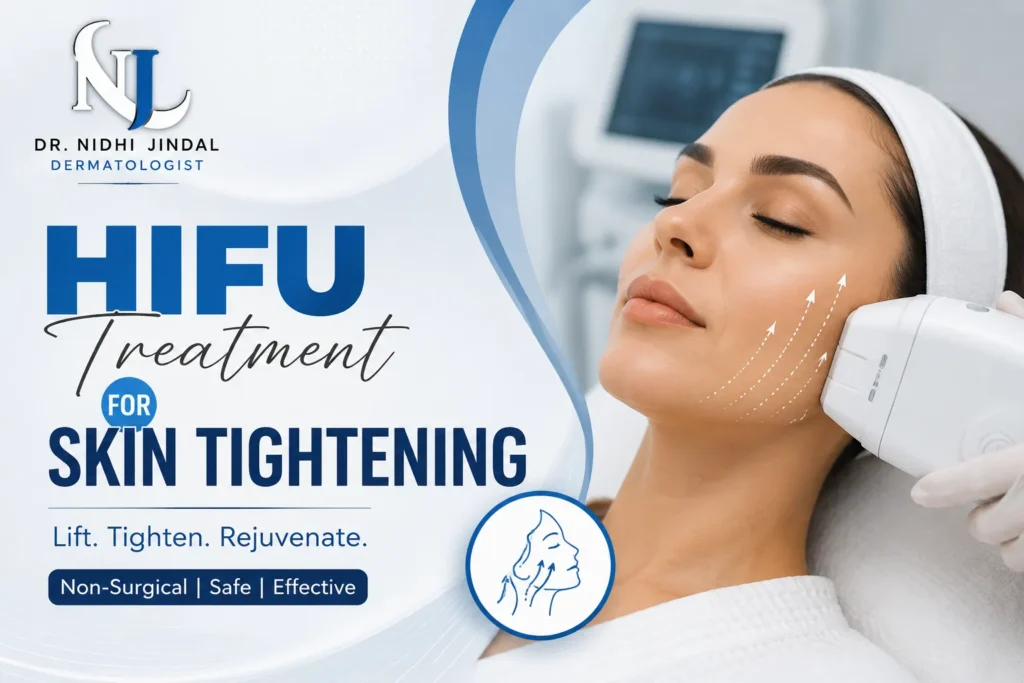
HIFU treatment has emerged as one of the popular non-invasive approaches for improving mild to moderate skin laxity and promoting a firmer, more youthful appearance. It uses focused ultrasound energy to deliver controlled thermal energy into selected deeper tissue layers, stimulating the body’s natural collagen-remodelling process.
For individuals considering non-surgical skin tightening, consultation with an experienced dermatologist is important because treatment settings, target depths, and the expected outcome need to be tailored to each person’s skin and facial structure.
If you are looking for a Best Dermatologist in Newtown, Kolkata for HIFU treatment, a proper skin assessment can help determine whether this technology is appropriate for your concerns and expectations.
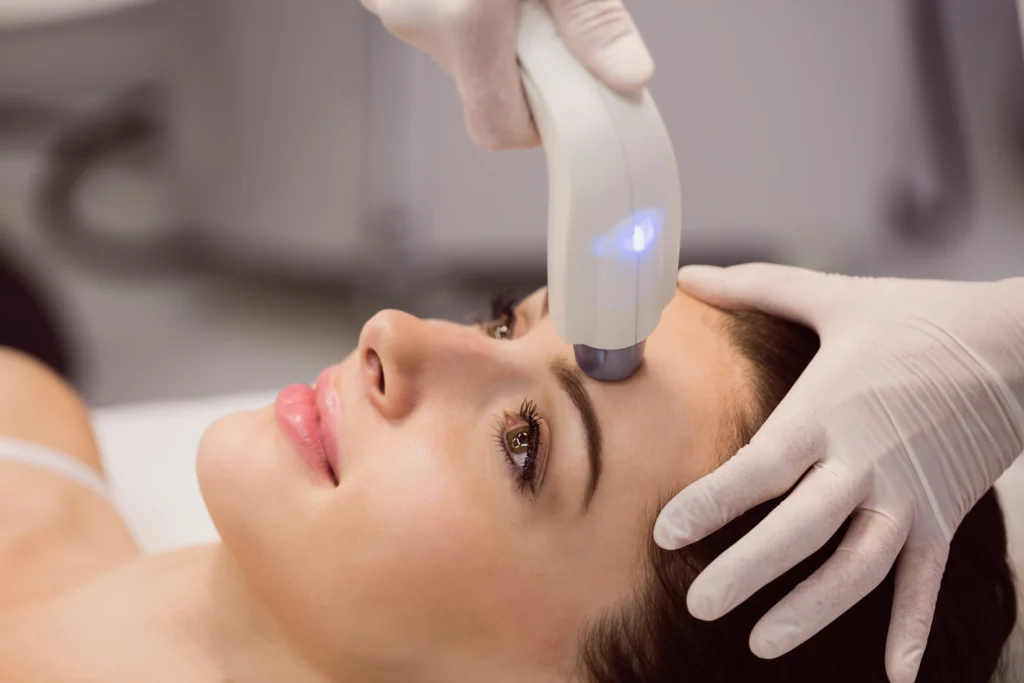
HIFU stands for High-Intensity Focused Ultrasound. In aesthetic dermatology, focused ultrasound technology is used to deliver energy at selected depths beneath the skin without intentionally damaging the surface layer.
Unlike many superficial treatments that primarily work on the epidermis or upper dermis, appropriately designed focused-ultrasound treatments can target deeper tissue planes. The controlled thermal effect can trigger a wound-healing response and encourage collagen remodelling.
Clinical studies and systematic reviews have reported improvements in facial skin tightening and laxity following microfocused ultrasound treatment, although the degree of improvement varies between individuals and treatment protocols.
It is important to understand that HIFU treatment is not equivalent to a surgical facelift. It is generally more suitable for people with mild to moderate laxity who want gradual, natural-looking improvement rather than a dramatic surgical correction.
The effectiveness of HIFU treatment is largely related to controlled delivery of ultrasound energy into targeted tissue layers.
During the procedure, the ultrasound energy is focused at specific depths. At the focal points, thermal energy creates controlled zones of tissue heating. This stimulates a healing response and encourages collagen contraction and subsequent collagen remodelling.
The device delivers ultrasound energy through the skin to predetermined depths.
The focused energy creates controlled thermal effects in the targeted tissue while the surrounding areas remain comparatively unaffected.
The body’s natural healing response encourages the formation and remodelling of collagen and elastin, gradually improving skin firmness and tissue support.
Research on microfocused ultrasound suggests that collagen remodelling and neocollagenesis play an important role in the gradual tightening effect.
This is why the results of HIFU treatment are usually not limited to what you see immediately after the procedure. Improvements may continue to develop over the following weeks and months as collagen undergoes remodelling.
A dermatologist may consider HIFU treatment for several concerns related to skin laxity and facial ageing.
Evidence suggests that focused ultrasound can be particularly useful for improving laxity in areas such as the lower face and neck.
However, HIFU is not suitable for every type or degree of facial ageing. A detailed assessment by a Best Dermatologist in Newtown, Kolkata can help determine whether skin tightening, fat reduction, another energy-based treatment, or a combination approach would be more appropriate.
One of the biggest advantages of HIFU treatment is that it does not require surgical incisions.
For patients who are not ready for a facelift or prefer a non-surgical approach, focused ultrasound may provide a useful option for improving mild to moderate skin laxity.
Ageing naturally reduces collagen production. Focused ultrasound can stimulate a controlled healing response that promotes collagen remodelling.
This can gradually improve the firmness and structural quality of the skin.
Compared with surgical procedures, HIFU generally involves little downtime. Many patients can return to their routine activities relatively quickly.
However, temporary redness, swelling, tenderness or discomfort can occur after treatment.
Because collagen remodelling takes time, improvements typically develop gradually.
This can be appealing to patients who want their appearance to look fresher and firmer without a sudden or dramatically altered appearance.
When appropriately selected and performed, HIFU treatment can improve the appearance of laxity around areas such as the jawline, cheeks and neck.
Since HIFU does not require surgical incisions, there is no surgical scar associated with the treatment.
A dermatologist can customize the treatment according to the patient’s age, skin laxity, facial anatomy, treatment area and desired outcome.
This personalized approach is one reason why choosing an experienced Best Dermatologist in Newtown, Kolkata is important.
Also Read: What is Psoriasis? Complete Information

Before starting treatment, the dermatologist should examine the skin and understand the patient’s concerns and expectations.
The treatment area is cleansed, and ultrasound gel may be applied to facilitate appropriate contact between the device and skin.
The handpiece is then positioned over the selected treatment areas.
The device delivers focused ultrasound energy at predetermined depths and locations.
During treatment, patients may experience sensations such as:
The level of discomfort varies depending on the individual, treatment area, device and treatment settings.
Modern treatment approaches aim to balance effectiveness with patient comfort.
The duration depends on the area being treated and the treatment plan.
A smaller treatment area may require less time, while a full-face and neck procedure may take longer.
Your dermatologist can provide a more accurate estimate after evaluating your skin and deciding which areas require treatment.
One of the most important things to understand about HIFU treatment is that the results are usually gradual.
Some patients may notice an initial improvement in firmness or contour, but the more meaningful changes generally develop over time as collagen remodelling progresses.
Studies have reported improvements continuing over several months following microfocused ultrasound treatment. A systematic review found evidence of improvement in skin tightening and/or wrinkle reduction that could persist up to around one year in the available studies, although longer-term data remain limited.
Another meta-analysis found measurable aesthetic improvement at 90 and 180 days after treatment, while also noting that further high-quality research is needed to establish optimal treatment protocols.
Therefore, patients should avoid judging the final result immediately after the procedure.
The longevity of results varies from person to person.
Factors that may influence the duration include:
HIFU does not stop the natural ageing process. Over time, collagen production continues to decline and skin laxity may gradually return.
Your dermatologist may recommend maintenance treatment based on your individual needs rather than following a fixed schedule for everyone.
One of the attractions of HIFU treatment is the relatively short recovery period compared with surgery.
Most patients do not require prolonged downtime. However, temporary reactions may occur.
These effects are generally temporary. Systematic reviews have reported transient erythema, oedema and discomfort as common effects, while more significant complications are uncommon but possible.
The exact recovery experience depends on the device, treatment intensity, treatment area and individual sensitivity.
After HIFU treatment, your dermatologist may recommend simple skin-care measures.
Use appropriate broad-spectrum sunscreen and avoid excessive sun exposure.
Immediately after treatment, avoid unnecessarily irritating products if your dermatologist recommends a temporary break.
Post-treatment recommendations should be personalized according to your skin and the device used.
Depending on the treatment and your skin’s response, your dermatologist may advise temporarily avoiding activities that produce excessive heat.
Remember that collagen remodelling takes time. Give the skin sufficient time to respond.
When performed appropriately with a suitable device, correct settings and proper patient selection, focused ultrasound has a generally favorable safety profile.
However, HIFU treatment is not completely risk-free.
Potential adverse effects can include pain or discomfort, redness, swelling, bruising, tenderness and temporary sensory changes. Rare complications can include burns or nerve-related effects, particularly when treatment is performed incorrectly or inappropriate settings are used.
This highlights why treatment should be performed by a qualified and experienced medical professional rather than being chosen solely on the basis of low cost.

HIFU may be considered for adults with mild to moderate skin laxity who want non-surgical improvement.
A suitable candidate may have:
Evidence from systematic reviews indicates that microfocused ultrasound is most consistently supported for mild to moderate facial laxity.
However, patient selection is crucial.
A person with significant skin excess or advanced tissue laxity may not achieve the degree of lifting expected from surgery.
HIFU may not be appropriate for everyone.
Your dermatologist may postpone or avoid treatment in situations such as:
The exact contraindications depend on the specific device and treatment area. FDA guidance for focused ultrasound systems specifically highlights precautions involving open wounds or lesions, active implantable devices and certain metallic implants.
Therefore, a proper medical consultation before HIFU treatment is essential.
It is common for patients to ask whether HIFU can replace a facelift.
The answer is: not in every case.
HIFU is a non-invasive treatment designed primarily for improving mild to moderate laxity and promoting gradual tissue tightening.
A surgical facelift physically repositions and removes tissues to address more significant ageing changes.
Choosing between the two requires professional assessment.
HIFU is only one of several technologies available for skin rejuvenation.
Depending on the patient’s concern, a dermatologist may consider:
Recent evidence suggests that HIFU can be effective for skin laxity, but outcomes vary according to treatment parameters and patient characteristics. A 2025 systematic review also highlighted the need for greater standardization of treatment protocols and patient selection.
This is why there is no universally “best” skin-tightening treatment. The right procedure depends on the patient’s anatomy, skin quality, degree of laxity and aesthetic goals.
The technology itself is only one part of successful HIFU treatment.
Accurate assessment, correct treatment depth, appropriate energy selection, anatomical knowledge and realistic treatment planning are equally important.
An experienced dermatologist can assess:
If you are searching for the Best Dermatologist in Newtown, Kolkata, look for a qualified dermatologist who evaluates your skin personally rather than recommending the same treatment protocol to every patient.

HIFU can cause temporary discomfort, warmth, tingling or brief stinging. Pain levels vary between individuals and treatment areas. Recent meta-analysis data suggest overall discomfort is generally moderate.
Most people can return to their normal activities relatively quickly, although temporary redness, swelling or tenderness may occur.
HIFU primarily addresses tissue laxity and can improve the appearance of certain wrinkles associated with ageing and sagging. It is not a complete solution for every type of wrinkle.
For mild to moderate laxity, HIFU may provide a non-surgical tightening option. However, it cannot reproduce the lifting effect of surgery in patients with significant excess skin or advanced laxity.
The number and frequency of sessions depend on your skin condition, treatment goals, device and clinical assessment. Some protocols use a single treatment followed by observation, while maintenance may be considered later.
No. Patient selection is important. A dermatologist should assess your medical history, skin condition, facial anatomy and expectations before treatment.
HIFU treatment can be a valuable non-surgical option for individuals concerned about mild to moderate skin laxity, loss of firmness, early jowling and changes in facial contour. By delivering focused ultrasound energy into selected tissue layers, it can stimulate a controlled healing response and collagen remodelling, resulting in gradual skin tightening.
However, HIFU should not be viewed as a “one-size-fits-all” treatment or a replacement for surgery in every patient. The quality of the result depends on appropriate patient selection, treatment planning, device selection, technique and realistic expectations.
If you are considering HIFU treatment for facial or neck skin tightening, consulting a qualified dermatologist is the best way to understand whether it is suitable for you.
For patients seeking a Best Dermatologist in Newtown, Kolkata, a personalized dermatological consultation can help identify the most appropriate skin-tightening approach based on your individual concerns, skin quality and aesthetic goals.