
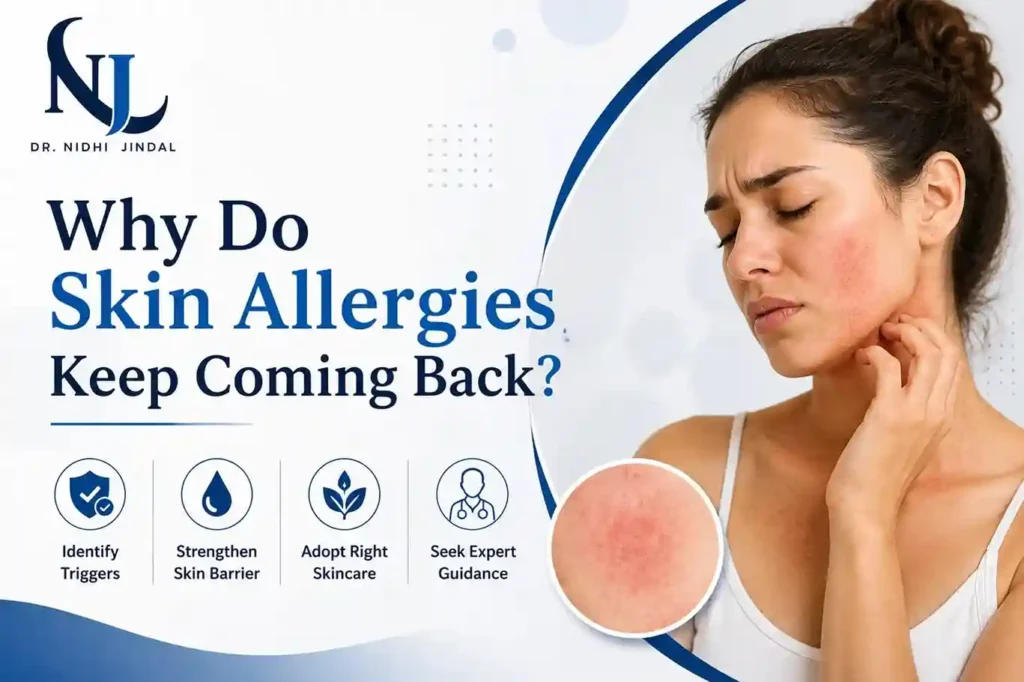
The best skin specialist in Newtown, Kolkata can identify skin allergy triggers and provide personalized treatment to relieve itching, rashes, and recurring allergic skin conditions.
Choosing the best dermatologist in Newtown, Kolkata for skin allergies depends on the doctor’s expertise, accurate diagnosis, and personalized treatment approach. An experienced dermatologist identifies the underlying cause of allergies, recommends appropriate medications or allergy testing when needed, and provides preventive care. Timely consultation helps relieve symptoms, prevent recurring flare-ups, and maintain healthy, irritation-free skin through evidence-based treatment plans.
Skin allergies are among the most common dermatological conditions affecting people of all ages. They can cause itching, redness, swelling, rashes, dryness, blisters, or discomfort that impacts daily life. While some allergies disappear quickly, others become chronic and require expert medical care.
Consulting the best dermatologist in Newtown, Kolkata helps determine the exact cause through clinical evaluation, medical history, and allergy assessment. Early diagnosis can prevent complications and improve long-term skin health.
If you experience persistent itching or recurring allergic reactions, scheduling a book dermatologist appointment for skin allergy treatment is the safest approach.
Skin allergies happens when the immune system reacts to substances that are normally harmless. These allergens trigger inflammation, resulting in itching, redness, swelling, or rashes. Treatment depends on identifying the trigger, avoiding exposure, restoring the skin barrier, and using appropriate medical therapy prescribed by a dermatologist.
A skin allergy is an immune-mediated reaction that develops after contact with an allergen or irritant. Symptoms may appear within minutes or several days, depending on the type of allergic response.
Common symptoms include:
1. Contact Allergens
Direct skin contact with allergens may trigger reactions.
Examples:
2. Food Allergies
Certain foods may contribute to allergic skin reactions in susceptible individuals.
Examples include:
3. Medication Allergies
Some medicines may cause allergic skin reactions.
Examples:
4. Environmental Allergens
Environmental exposure may worsen allergy symptoms.
Examples:
5. Insect Bites and Stings
Mosquitoes, bees, ants, and other insects may trigger localized or generalized allergic reactions.
6. Seasonal Changes
Cold weather, humidity, heat, and sudden climate changes can aggravate sensitive skin.
7. Genetic Factors
Individuals with a family history of eczema, asthma, or allergic rhinitis are more likely to develop allergic skin diseases. Check what Doctor Says for this click Youtube Link: https://www.youtube.com/watch?v=9kX93xhBcpU
Allergic Contact Dermatitis
Occurs after exposure to allergens like metals, fragrances, or cosmetics.
Atopic Dermatitis (Eczema)
A chronic inflammatory skin condition associated with allergies and dry skin.
Raised, itchy welts that may occur suddenly due to allergies, infections, or medications.
Angioedema
Deep swelling beneath the skin, commonly affecting the face, lips, eyelids, or throat.
Photoallergic Reactions
Develop after exposure to sunlight combined with certain medications or skincare products.
Symptoms That Need Dermatologist Evaluation
Consult the best dermatologist for skin allergy and itching if you experience:
A dermatologist may recommend:
The goal is to identify the underlying trigger and rule out other skin conditions.
Treatment depends on the diagnosis and severity.
1. Allergen Avoidance
Tracing and avoiding triggers is often the first procedure.
2. Moisturizers
Regular use of fragrance-free moisturizers helps restore the skin barrier.
3. Prescription Medications
A dermatologist may prescribe:
Always use medications under medical supervision.
4. Lifestyle Modifications
Helpful measures include:
5. Follow-Up Care
Regular follow-up helps monitor chronic skin allergies and adjust treatment as needed.
You should book dermatologist appointment for skin allergy treatment if:
A top dermatology clinic for chronic skin allergies offers:
Dr. Nidhi Jindal provides comprehensive evaluation and management of allergic skin conditions using evidence-based dermatology practices. Patients receive individualized treatment plans based on their medical history, skin type, symptoms, and potential triggers. The focus is on accurate diagnosis, symptom relief, skin barrier restoration, and prevention of future flare-ups through personalized care and patient education. Check Patient’s Testimonial: https://shorturl.at/MeSsQ
| Cause | Common Symptoms | Possible Treatment |
| Cosmetics | Rash, itching | Avoid allergen, prescribed creams |
| Nickel | Redness, eczema | Avoid metal exposure |
| Food Allergy | Hives, itching | Identify trigger, medical treatment |
| Dust/Pollen | Rash, itching | Allergen control, medications |
| Medication | Skin rash | Medical evaluation |
| Insect Bite | Swelling, redness | Symptom relief, medical care if severe |
| Eczema | Dry itchy skin | Moisturizers and prescribed therapy |
| Contact Dermatitis | Red itchy patches | Trigger avoidance and treatment |
Skin allergies can result from allergens, environmental factors, genetics, or irritants and often require accurate diagnosis for effective management. Consulting the best dermatologist in Newtown, Kolkata helps identify triggers and develop a personalized treatment plan. Dr. Nidhi Jindal emphasizes evidence-based care, preventive strategies, and long-term skin health to reduce flare-ups, relieve symptoms, and improve overall quality of life. Visit our Physical Address click the link: https://maps.app.goo.gl/58pfRve8DeGjZTwS8
What Causes Skin Allergies and How Are They Treated?
Skin allergies are caused by immune reactions to allergens such as cosmetics, metals, foods, medications, dust, or environmental factors. Treatment involves identifying triggers, avoiding exposure, restoring the skin barrier, and using dermatologist-prescribed medications when necessary.
Who is the best dermatologist in Newtown, Kolkata for skin allergies?
If you have persistent or recurrent allergic skin conditions, consult a qualified dermatologist with experience in diagnosing and treating eczema, contact dermatitis, urticaria, and other allergic skin disorders. Dr. Nidhi Jindal provides evidence-based dermatological care tailored to individual patient needs.
When should I book a dermatologist appointment for skin allergy treatment?
You should seek medical evaluation if itching, rashes, swelling, or redness persist, recur frequently, spread rapidly, or do not improve with basic skin care measures.
Can chronic skin allergies be cured permanently?
Some allergic skin conditions can be well controlled, while others are chronic and require long-term management. Identifying triggers and following a dermatologist’s treatment plan can significantly reduce flare-ups.
What is the best treatment for skin allergy and itching?
The best treatment depends on the underlying cause. A dermatologist may recommend moisturizers, trigger avoidance, prescription creams, antihistamines, or other medications based on the diagnosis.
Are home remedies enough for skin allergies?
Mild irritation may improve with gentle skincare and moisturization. However, persistent, severe, or recurrent symptoms should be evaluated by a dermatologist for an accurate diagnosis and appropriate treatment.