
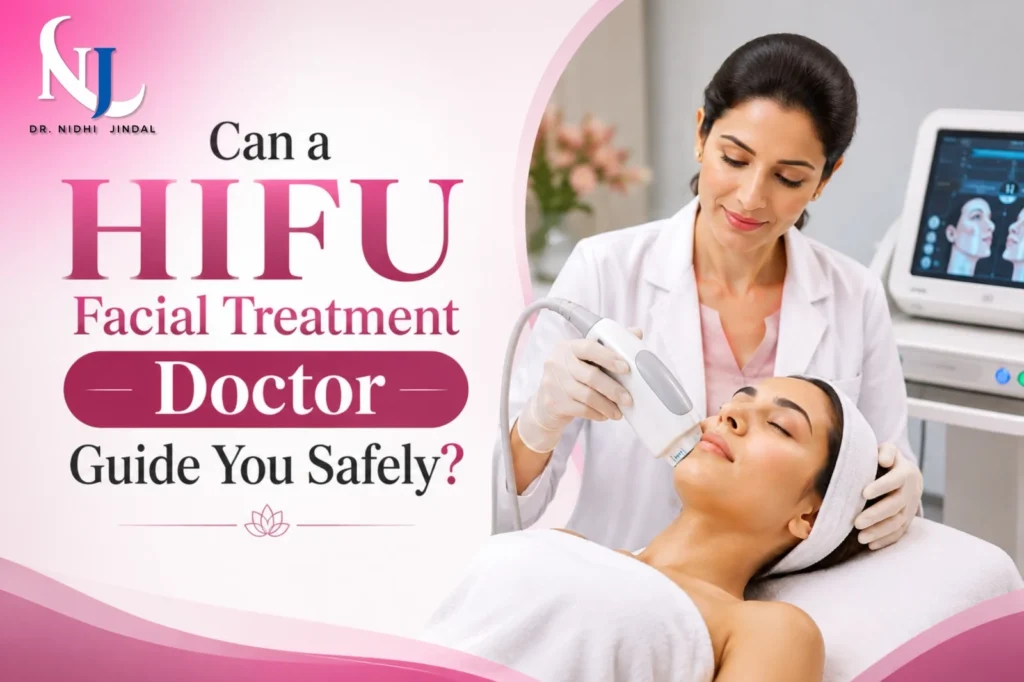
HIFU treatment uses focused ultrasound energy to support skin tightening and collagen production. If you are considering HIFU facial treatment for mild laxity, a professional consultation can help determine whether you are a suitable candidate.
High-Intensity Focused Ultrasound (HIFU) is a non-surgical cosmetic treatment that uses focused ultrasound energy at targeted depths beneath the skin. The controlled energy stimulates tissue and encourages collagen remodelling, which may gradually improve firmness and skin texture.
Unlike surgical facelifts, HIFU does not require incisions. However, suitability depends on factors such as skin laxity, age, skin condition, treatment goals, and overall health.
A consultation with a HIFU Facial treatment doctor in Newtown, Kolkata can help assess whether ultrasound-based skin tightening is appropriate for your concerns.
HIFU may be considered by adults who want non-surgical skin tightening and have appropriate skin laxity.
Potential candidates may include people who:
HIFU is generally more appropriate when the primary concern is skin laxity rather than significant excess skin. Learn more click our Video link: https://www.youtube.com/shorts/3wC017tzdO4
HIFU is not suitable for everyone. A dermatologist should evaluate your skin, medical history, medications, previous cosmetic procedures, and treatment expectations before proceeding.
Treatment may need to be avoided or postponed in situations such as:
The exact contraindications can vary according to the HIFU device, treatment area, and individual circumstances. Therefore, an in-person assessment is important.
| Candidate factor | HIFU suitability |
| Mild skin laxity | Often potentially suitable |
| Moderate facial laxity | May be suitable after assessment |
| Severe loose or excess skin | HIFU may provide limited improvement |
| Desire for non-surgical tightening | Potentially suitable |
| Active skin infection | Usually postpone treatment |
| Open wound in treatment area | Treatment should generally be postponed |
| Unrealistic expectations | Further consultation recommended |
| Pregnancy | Elective treatment is generally postponed |
This table provides general information. A qualified dermatologist should make the final treatment recommendation.
HIFU is primarily associated with non-surgical skin tightening and facial contouring. Depending on the device and treatment plan, it may be considered for areas such as:
Jawline Definition
Loss of skin firmness around the lower face can make the jawline appear less defined. HIFU may support gradual tightening in appropriately selected patients.
Cheek and Lower-Face Laxity
Some patients seek HIFU when they notice early sagging in the cheeks or lower face. The treatment is intended to stimulate collagen-related changes rather than physically remove excess skin.
Neck Skin Tightening
Selected patients may consider HIFU for mild neck laxity. The treatment area and depth should be determined by a trained professional.
Early Signs of Skin Ageing
People experiencing early changes in firmness may explore HIFU as part of a broader skin-rejuvenation plan.
A typical consultation and treatment process may include several stages:
A professional HIFU treatment consultation for skin tightening is therefore more important than simply choosing a treatment based on advertisements or before-and-after photographs.
HIFU can produce some early changes in skin appearance, but the full effect is generally gradual. Collagen remodelling takes time, so improvements in firmness and definition may become more noticeable over the following weeks or months.
Patients should therefore avoid expecting a surgical facelift-like result immediately after treatment.
Experience varies from person to person and depends on the treatment area, device, energy settings, and individual sensitivity.
Some patients may experience sensations such as:
Your dermatologist can explain what sensations are expected with the specific HIFU system being used.
HIFU is non-invasive, but it is not completely risk-free. Possible temporary effects can include redness, swelling, tenderness, tingling, or sensitivity.
Rare complications may occur, particularly when treatment is incorrectly performed or inappropriate settings are used. This is one reason why treatment should be performed by an appropriately qualified and experienced professional.
Seek medical advice if you experience unexpected, severe, or persistent symptoms after treatment.
A consultation helps determine whether HIFU actually matches your skin concern.
During an assessment, a dermatologist may consider:
A Best Dermatologist in Newtown, Kolkata can help you understand both the potential benefits and limitations before you decide.
If you plan to book HIFU skin tightening consultation, prepare relevant information before your appointment.
Before Your Consultation
Good communication helps create a treatment plan based on your individual needs rather than a generic procedure.
HIFU and a surgical facelift are fundamentally different approaches.
| Feature | HIFU | Surgical facelift |
| Procedure type | Non-surgical | Surgical |
| Incisions | No | Yes |
| Downtime | Usually limited | Longer recovery |
| Skin removal | No | Can remove excess skin |
| Results | Gradual and generally more subtle | More significant structural change |
| Suitable for | Selected mild-to-moderate laxity | Significant ageing and excess skin in appropriate candidates |
| Consultation | Essential | Essential |
HIFU should not be marketed as an equivalent replacement for a surgical facelift. The right option depends on anatomy, degree of laxity, expectations, and medical suitability.
No. HIFU and daily skincare serve different purposes.
A balanced skin-health routine may include:
Professional treatments can complement skincare, but they do not eliminate the need for everyday skin protection.
Dermatologist Dr Nidhi Jindal can guide patients considering HIFU by evaluating their skin condition, degree of laxity, cosmetic goals, and suitability for treatment.
A personalised consultation is particularly useful for people who are unsure whether HIFU is appropriate or whether another skin-tightening or rejuvenation option would better match their needs. The focus should be on realistic outcomes, informed decision-making, appropriate treatment selection, and patient safety.
When selecting a practitioner, consider more than promotional claims or discounted treatment packages.
Look for:
The best treatment plan is not necessarily the one offering the newest or most heavily promoted procedure. It is the one that appropriately addresses your individual concern. Check the link Patient’s testimonial click: https://bit.ly/4gGk479
Who should get HIFU treatment and who should avoid it?
HIFU may suit adults with mild-to-moderate skin laxity seeking non-surgical tightening. People with certain medical conditions, active skin problems, unsuitable implants, or other contraindications may need to avoid or postpone treatment after professional assessment.
Is HIFU suitable for everyone with sagging skin?
No. HIFU is not appropriate for every type or degree of sagging. Significant excess skin may require a different approach, while mild-to-moderate laxity may be more suitable for non-surgical treatment.
How long does it take to see HIFU results?
HIFU results generally develop gradually as collagen remodelling occurs. The timeline varies according to the individual, treatment area, device, and treatment parameters.
Can HIFU permanently tighten facial skin?
HIFU does not stop the natural ageing process. Improvements may persist for some time, but skin continues to age. Your dermatologist can explain realistic expectations based on your skin condition.
Is HIFU better than a facelift?
Neither is universally better. HIFU is non-surgical and generally offers more subtle tightening, while a facelift can address significant laxity and excess skin surgically. A consultation can determine which approach better fits your goals.
Can I book HIFU skin tightening consultation without a skin assessment?
You can request a consultation, but a proper skin assessment should occur before treatment. It allows the practitioner to identify contraindications and determine whether HIFU is appropriate.
Is HIFU safe for sensitive skin?
Sensitivity alone does not automatically determine suitability. A dermatologist should examine the skin and identify active irritation, inflammation, infection, or other factors that could affect treatment safety.
What should I ask a dermatologist before HIFU?
Ask about your suitability, expected results, treatment areas, device being used, possible side effects, number of sessions, aftercare, alternatives, and whether your desired outcome is realistic.
HIFU can be a useful non-surgical option for selected people with mild-to-moderate skin laxity, but it is not suitable for everyone. A professional assessment helps identify contraindications, set realistic expectations, and select appropriate treatment. Consulting a qualified dermatologist before choosing HIFU supports safer, personalised care and helps patients make informed decisions about their skin-tightening goals and long-term skin health. Visit Our Map Link: https://maps.app.goo.gl/Tw4VmJPDsGjrYsw86