
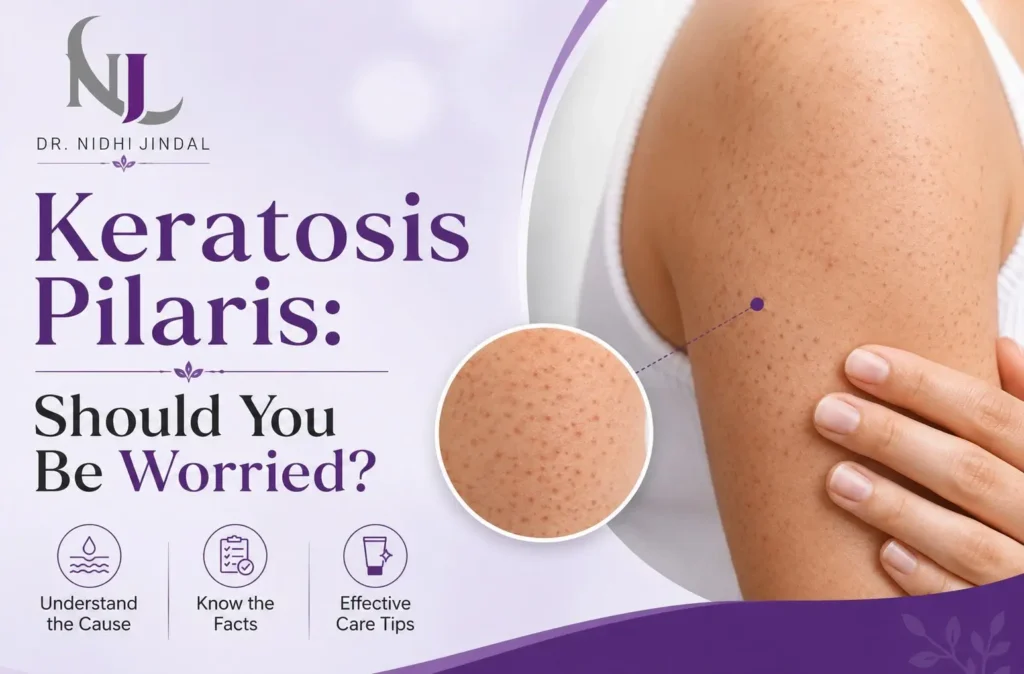
ave you spotted small rough bumps on your arms, thighs, or cheeks? Keratosis Pilaris is a common and harmless skin condition that affects people of all ages. Understanding its causes, symptoms, and treatment options can help you manage it effectively and improve your skin’s appearance with the right skincare routine and expert dermatological advice.
Which Is the Best Dermatologist in Newtown, Kolkata for Keratosis Pilaris Care? This complete guide explains What is Keratosis Pilaris and what causes it?, covering symptoms, diagnosis, effective treatments, prevention, and skincare tips. Expert insights from Dr Nidhi Jindal help you achieve healthier, smoother skin with evidence-based care.
Keratosis Pilaris (KP), often called “chicken skin,” is a common, harmless skin condition that causes tiny, rough bumps on the skin. These bumps develop when keratin—a natural protein that protects the skin—builds up and blocks hair follicles.
If you’re searching for the best dermatologist in Newtown, Kolkata, understand What is Keratosis Pilaris and how do you treat it?is the starting point for healthier skin. Many patients also ask, What Is Keratosis Pilaris and Why Does It Occur? Fortunately, while KP cannot always be permanently cured, it can be effectively managed with the right skincare routine and professional dermatological treatment.
Keratosis Pilaris occurs because excess keratin blocks the openings of hair follicles. Although the exact reason isn’t fully understood, genetics play a significant role.
Common contributing factors include:
It is not contagious, infectious, or caused by poor hygiene.
The condition develops when keratin accumulates instead of naturally shedding from the skin. This creates plugs inside hair follicles, producing rough bumps that resemble goosebumps.
Factors increasing risk include:
Symptoms vary from mild to moderate.
Common signs include:
The bumps feel like sandpaper and are usually skin-colored, white, red, or slightly brown.
Affected areas often become excessively dry.
Some individuals experience surrounding redness.
Although uncommon, mild itching can occur during winter.
Many patients seek treatment because of the skin’s appearance rather than discomfort.
The condition frequently affects:
Rarely, it may appear on the face or trunk.
Risk factors include:
Symptoms often improve naturally with age.
An experienced dermatologist usually diagnoses Keratosis Pilaris through a clinical skin examination.
Diagnosis typically includes:
Laboratory tests are rarely required.
Consulting the best dermatologist in Newtown, Kolkata ensures an accurate diagnosis and a personalized treatment plan.
A dermatologist evaluates:
Professional guidance helps reduce flare-ups while improving overall skin health. For more details visit our Youtube : https://www.youtube.com/watch?v=Bkp0ngD6sag
Treatment focuses on reducing roughness and improving skin texture.
Daily moisturizers containing:
help soften the skin.
Chemical exfoliants containing:
remove excess dead skin cells.
Avoid harsh scrubbing, which may worsen irritation.
Prescription retinoids help prevent follicular plugging by improving skin cell turnover.
These should be used under medical supervision.
Dermatologists may prescribe:
based on skin sensitivity.
Dermatologists may prescribe:
based on skin sensitivity.
Currently, there is no permanent cure.
However, consistent treatment significantly improves:
Many people experience improvement as they grow older.
Simple lifestyle changes make a noticeable difference.
Moisturize Daily
Apply moisturizer immediately after bathing.
Avoid Hot Water
Use lukewarm water to prevent excessive dryness.
Choose Mild Cleansers
Fragrance-free cleansers help maintain the skin barrier.
Exfoliate Gently
Avoid aggressive scrubbing.
Use Humidifiers
Adding moisture to indoor air helps prevent dry skin during winter.
Wear Soft Clothing
Cotton fabrics reduce friction.
While no diet cures KP, healthy nutrition supports skin function.
Include:
Balanced nutrition contributes to healthier skin.
Consult a dermatologist if:
Early treatment often provides better long-term results.
Dr Nidhi Jindal provides patient-centered dermatology care based on current clinical evidence and individualized treatment plans. She emphasizes accurate diagnosis, realistic expectations, and long-term skin health through tailored skincare, medical therapies when needed, and education on daily skin maintenance. Her approach focuses on improving skin texture while protecting the skin barrier and minimizing unnecessary irritation.
Keratosis Pilaris is a common, harmless condition that can be managed successfully with consistent skincare and expert guidance. If you’re looking for the Dermatologist in West Bengal, timely evaluation can help improve skin texture and reduce visible bumps. Dr Nidhi Jindal recommends a personalized treatment plan combining gentle skincare, medical therapies when appropriate, and long-term skin barrier protection for healthier-looking skin.
Is Keratosis Pilaris contagious?
No. It cannot spread from one person to another.
Does Keratosis Pilaris go away naturally?
Many people notice gradual improvement with age, although some continue to have mild symptoms into adulthood.
Can moisturizers completely remove Keratosis Pilaris?
Moisturizers improve dryness and roughness but usually need to be combined with regular skincare for the best results.
Can children develop Keratosis Pilaris?
Yes. It commonly begins during childhood or adolescence.
Is Keratosis Pilaris dangerous?
No. It is a benign skin condition and does not increase the risk of skin cancer or other serious diseases.